Lavender thrives in California when you prune hard after bloom, water deeply but infrequently, and use gravel mulch — not bark — during its critical first year.
- Prune one-third of growth right after flowering ends
- Water established lavender every 2–3 weeks in summer
- Use gravel or decomposed granite mulch, never bark
- Year-1 plants need weekly deep watering to root in
- Full sun and fast-draining soil are non-negotiable
Lavender (Lavandula spp.) is a woody, drought-adapted perennial native to the Mediterranean, grown across California for its fragrant blooms, pollinator value, and low water needs once established.
| Factor | Detail |
|---|---|
| Light | Full sun — minimum 6–8 hours direct |
| Water | Deep soak every 2–3 weeks once established; weekly in Year 1 |
| Hardiness Zone | USDA 5–10 (species dependent) |
| Soil | Fast-draining, sandy or gravelly; pH 6.5–8.0 |
| Mature Size | 1–3 ft tall and wide (varies by species) |
| Bloom Time | Late spring through midsummer |
How Should You Prune Lavender in California?
Prune lavender immediately after the main bloom flush fades, typically in late summer. Cut back roughly one-third of each stem's length, shaping the plant into a tidy mound — but never cut into old, bare wood, because lavender rarely regenerates from it. A second light trim in early spring removes winter-damaged tips and encourages bushy new growth.
- Use sharp bypass pruners or hedge shears for clean cuts
- Remove spent flower stems down to the first set of leaves
- Shape into a dome so rain and irrigation shed off the crown
- Skip fall pruning — new growth triggered late is frost-vulnerable
How Often Should You Water Lavender?
Established lavender wants deep, infrequent irrigation — a thorough soak every two to three weeks during California's dry season is plenty. Overwatering causes root rot faster than almost any other stress. In clay-heavy soils, cut frequency further and amend the planting hole with perlite or pumice to speed drainage.
- Year-1 plants: water deeply once per week to establish roots
- Year-2 and beyond: every 2–3 weeks in summer, less in winter
- Water at the base, not overhead — wet foliage invites fungal disease
- If leaves yellow and droop, suspect overwatering before underwatering

Why Use Gravel Mulch Instead of Bark in Year 1?
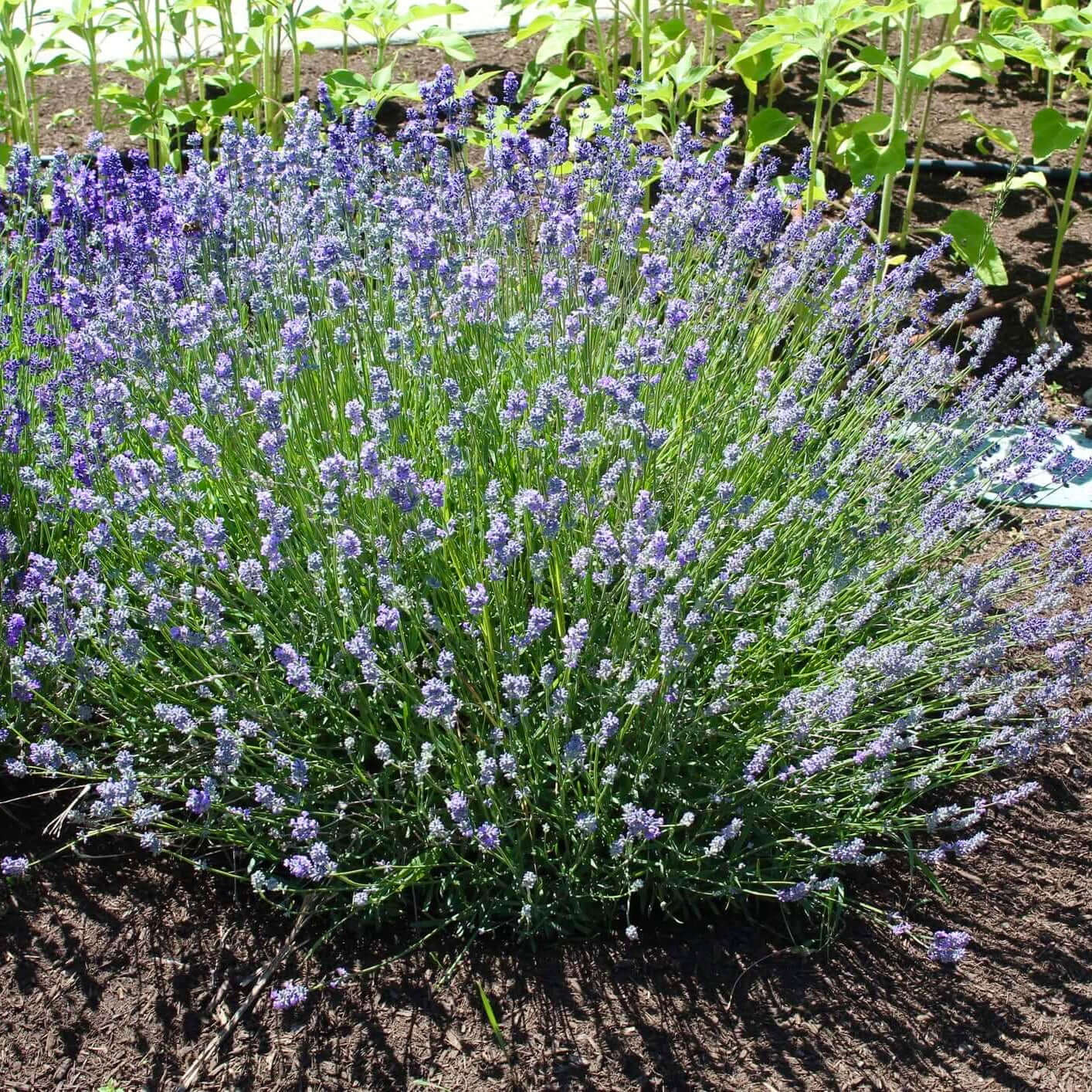
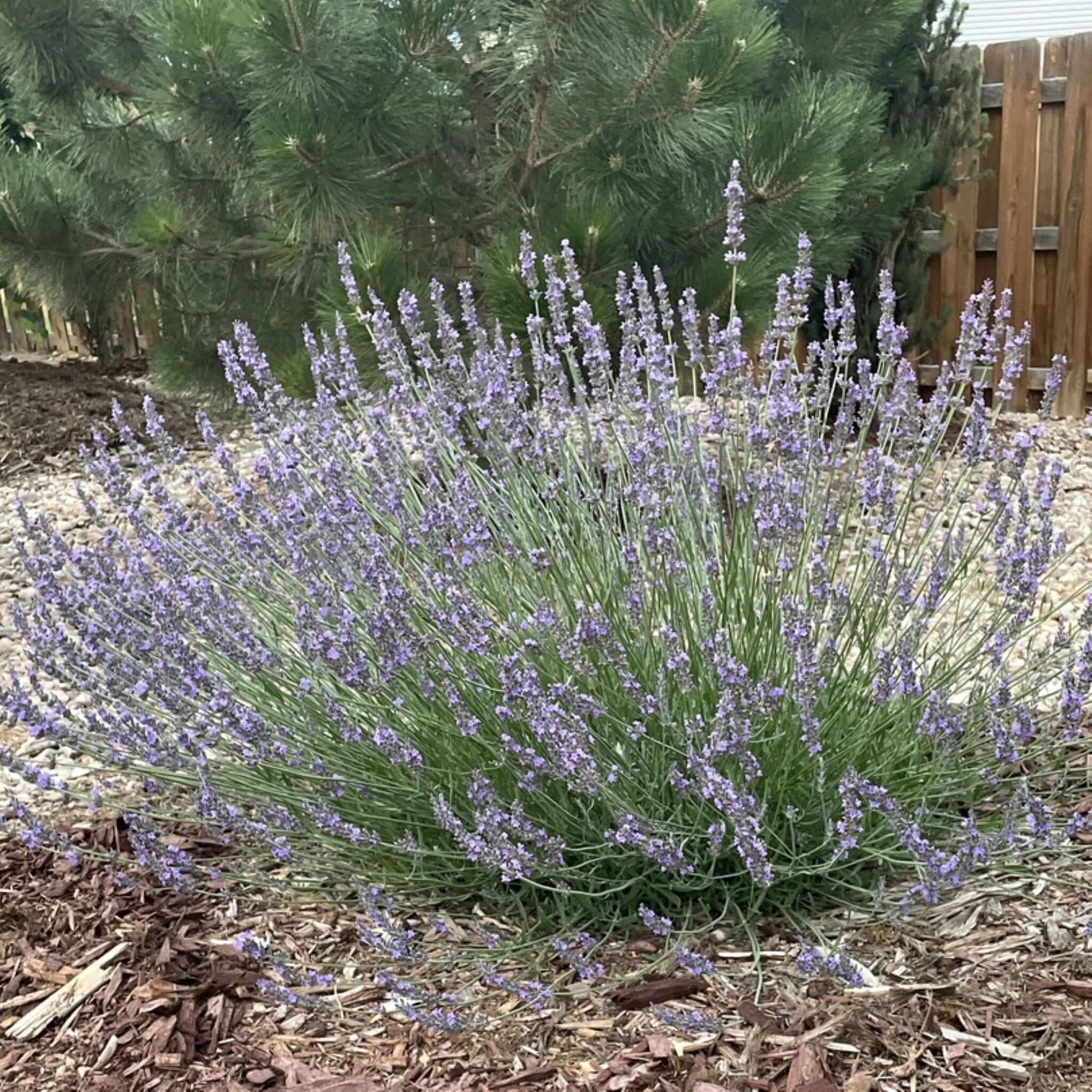
Bark mulch traps moisture against lavender's crown, creating the humid microclimate that breeds root rot and fungal dieback. Gravel, decomposed granite (DG), or crushed rock reflects heat, keeps the crown dry, and mimics the rocky Mediterranean soils lavender evolved in. Spread a 2-inch layer from the drip line inward, leaving a small gap around the main stem.
- Decomposed granite is affordable and widely available in California
- Light-colored gravel also reflects sunlight, warming the root zone
- Avoid rubber mulch — it traps heat and off-gasses in summer
- Top-dress with a thin layer of compost in spring if soil is very sandy
What Are the Best Lavender Varieties for California?
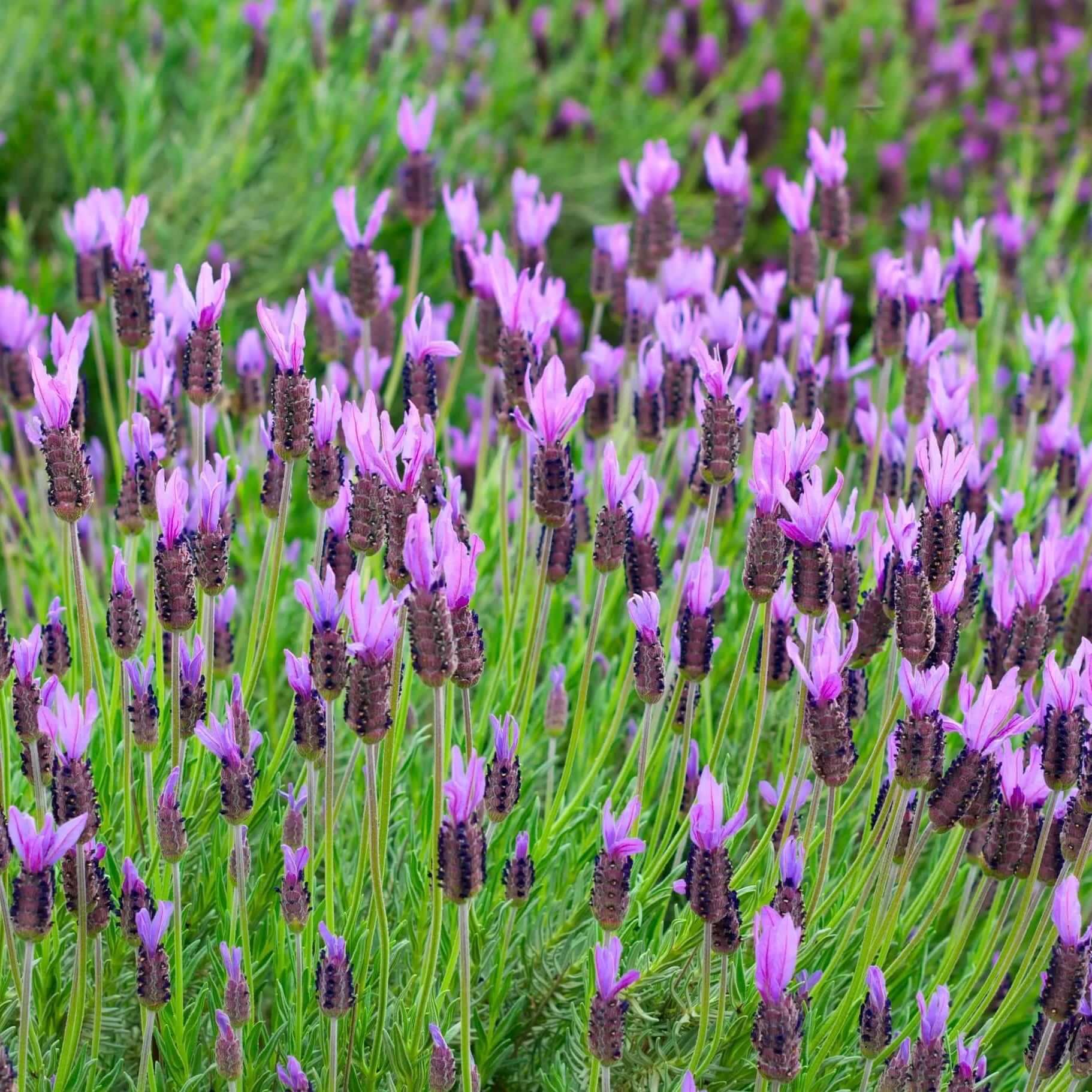
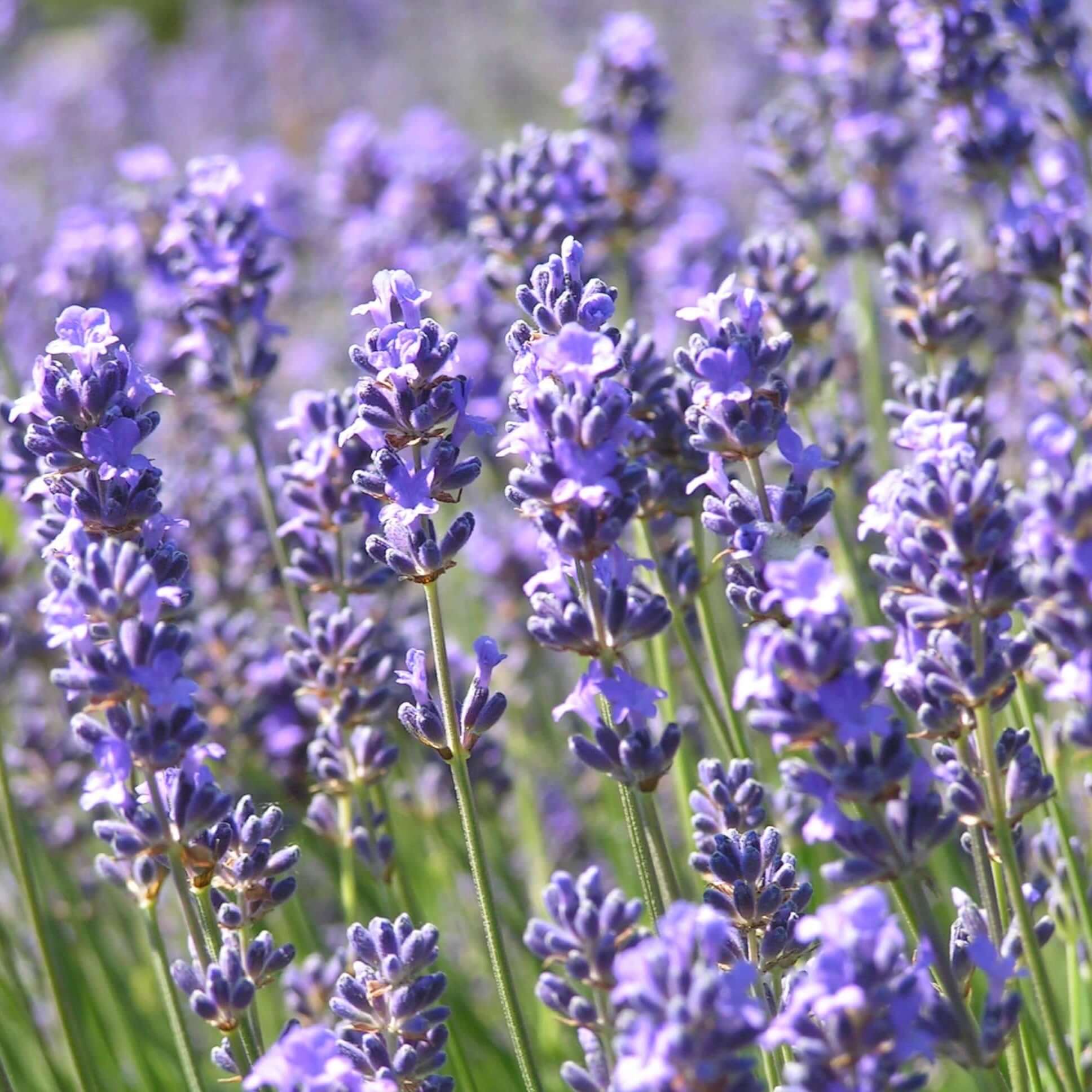
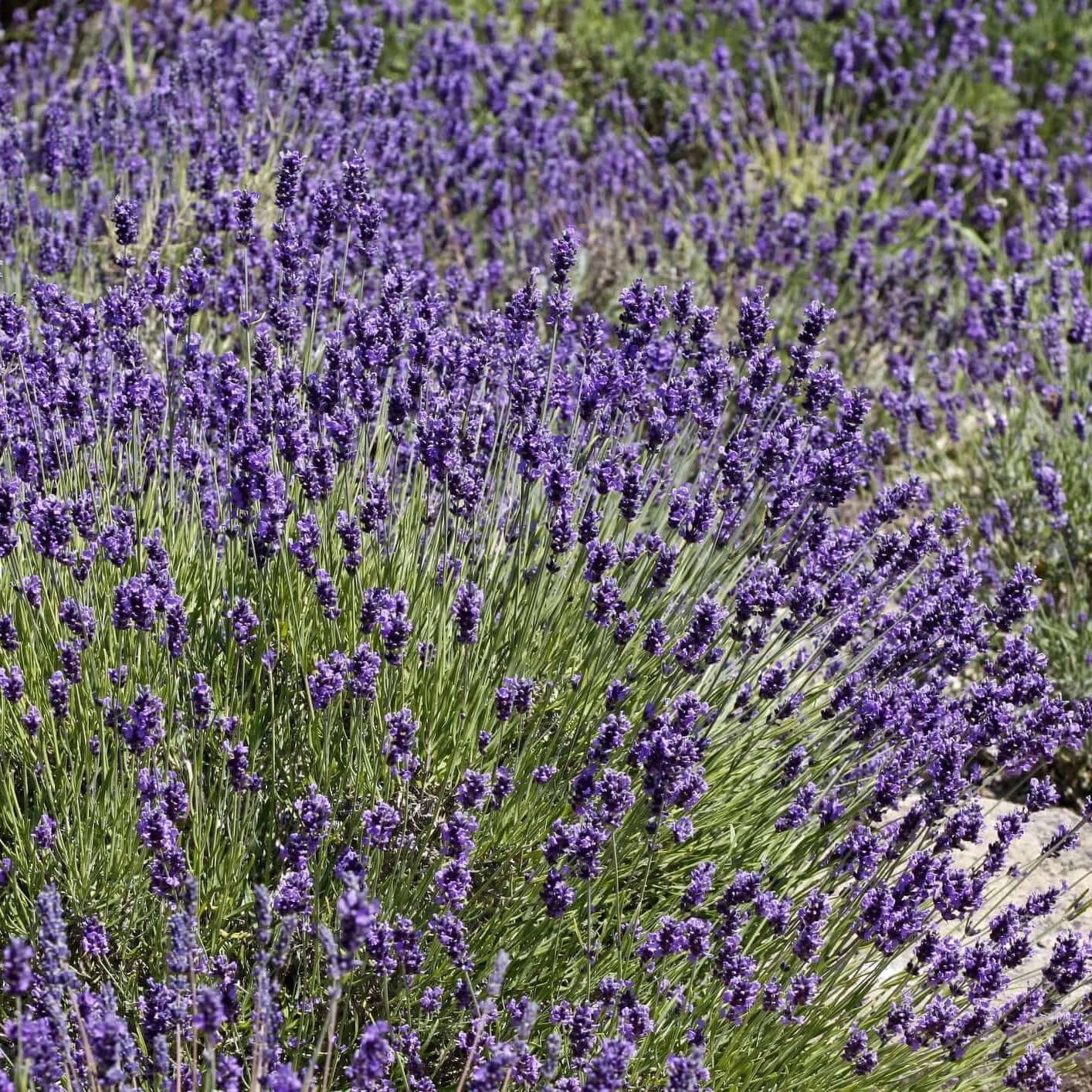
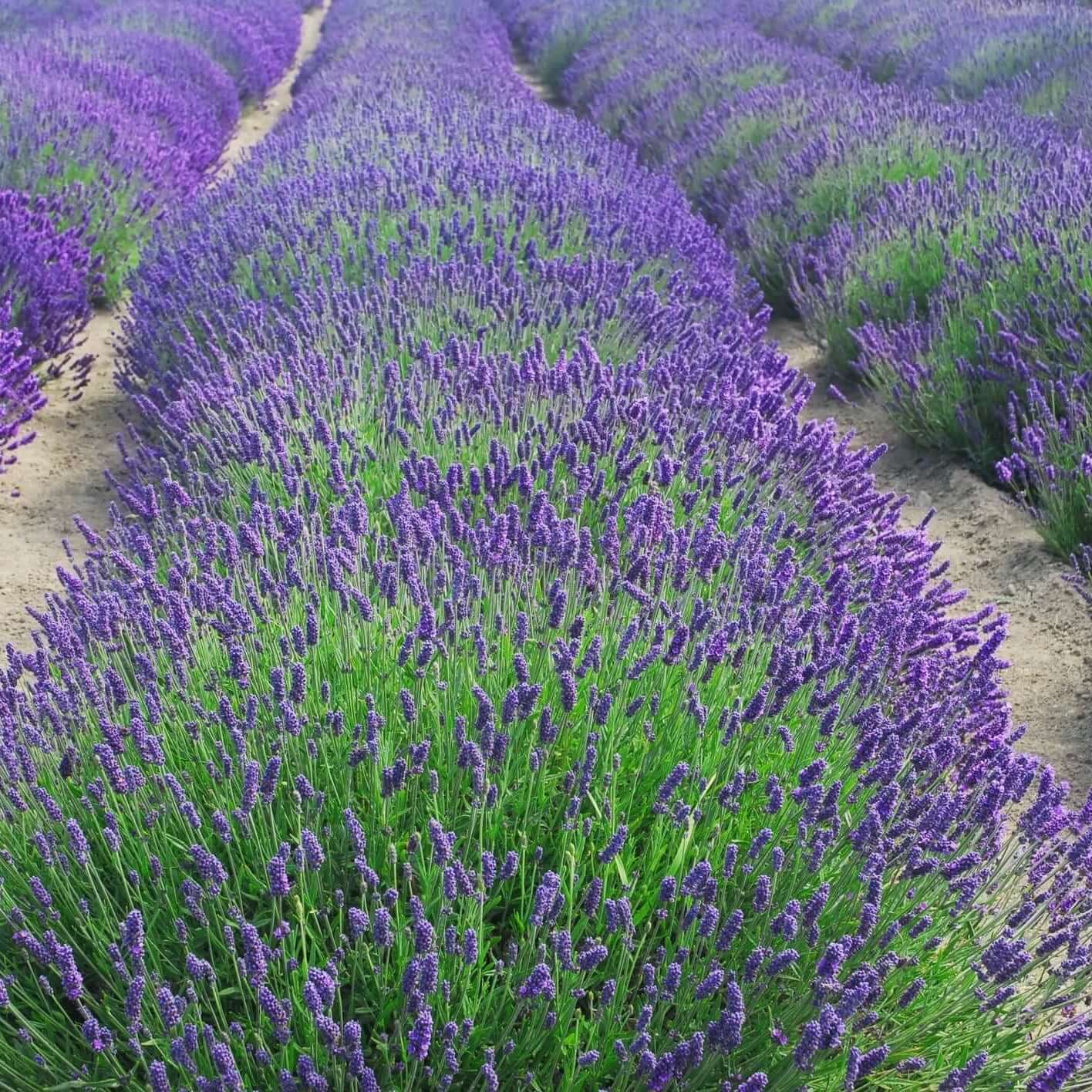
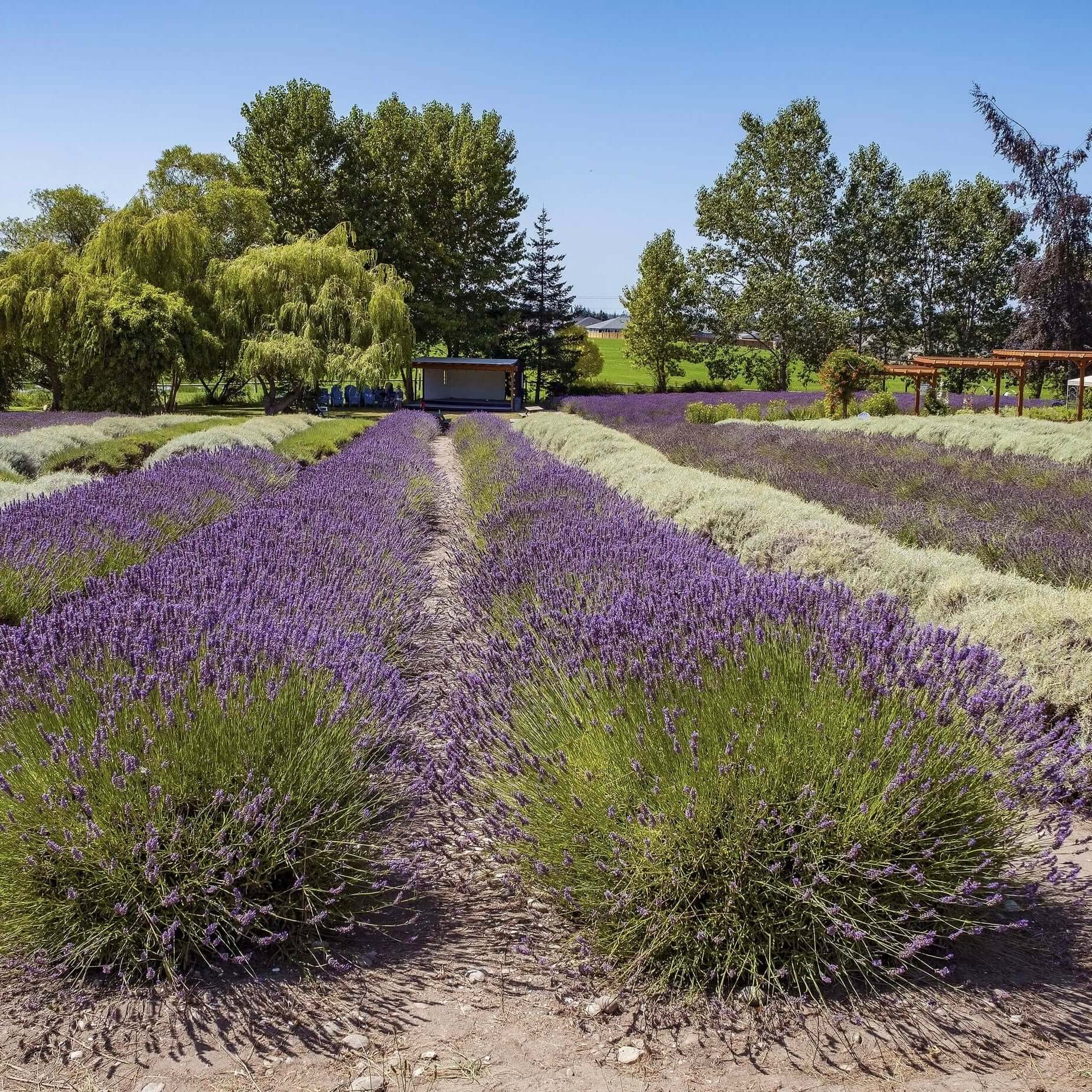
English lavender (Lavandula angustifolia) handles colder inland valleys, while French and Spanish types (L. dentata, L. stoechas) excel along the coast and in mild-winter zones. Lavandin hybrids (L. x intermedia) grow larger and produce more essential oil, making them a strong pick for hedging and mass planting in Central Valley heat.
- English types: best fragrance, cold-hardiest, compact form
- French types: long bloom season, tolerant of light coastal fog
- Lavandin hybrids: largest plants, highest oil yield, heat-tolerant
- Spanish lavender: showy "rabbit ear" blooms, very drought-tough

Frequently Asked Questions
Q1: Can you cut lavender back to the ground?
No. Lavender does not regenerate from old, bare wood. Always leave at least two to three inches of leafy green growth on every stem when pruning. Cutting to the ground usually kills the plant.
Q2: When is the best time to plant lavender in California?
Fall (October–November) is ideal in most California climates because cool temperatures and winter rain help roots establish before summer heat. Spring planting works too, but you'll need to water more frequently through the first summer.
Q3: Does lavender need fertilizer?
Lavender is a light feeder. A single application of a balanced, slow-release fertilizer in early spring is sufficient. Over-fertilizing produces leggy growth with fewer blooms and weaker fragrance.
Q4: Why is my lavender turning gray and dying?
Gray, wilting foliage usually signals root rot from overwatering or poor drainage. Pull back any bark mulch, reduce irrigation immediately, and check that the soil drains freely. In severe cases, the plant may not recover.
Q5: How long does a lavender plant live?
With proper pruning and drainage, lavender plants commonly live 10–15 years in California landscapes. Neglected plants that go unpruned tend to decline after 4–5 years as they become woody and sparse.
Q6: Can lavender grow in clay soil?
Lavender struggles in heavy clay unless you amend the planting hole generously with perlite, pumice, or coarse sand to improve drainage. Planting in a raised mound or raised bed is the most reliable fix for clay-heavy sites.
Get yours from PEX
Ready to add lavender to your California landscape? Browse our full catalog for container-grown plants shipped direct to your door.
Browse all plants